Pueblo Revival

New Mexico's synthesis of Ancestral Puebloan adobe mass and Spanish mission tradition — rounded parapets, projecting vigas, interior kiva fireplaces, and John Gaw Meem's University of New Mexico campus as the definitive regional modern.

Compare Pueblo Revival with another style →
Record020-AP
AestheticPueblo Revival
ClassAnalog / Nostalgic
StatusINGESTING
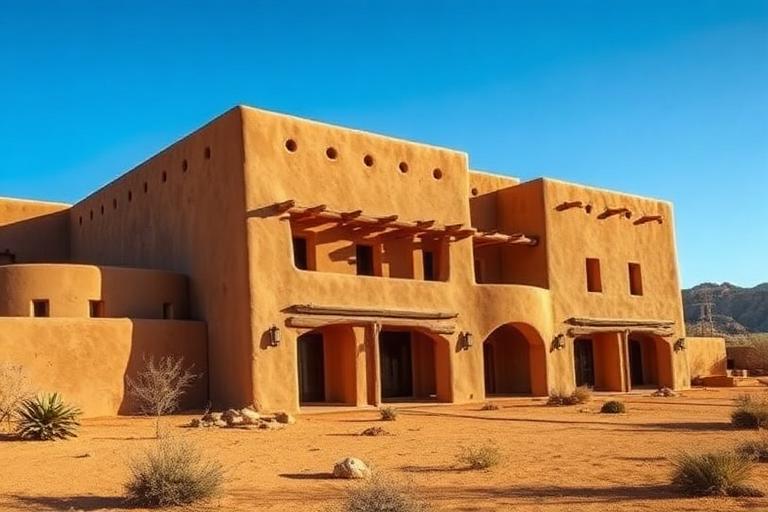
Example of the Pueblo Revival aesthetic
Archive platearch pueblo revival

Source document

Registrar's index cards on the platen glass — captured by the scanner

Elio Archive — Registrar's OfficePueblo RevivalFILE 020-AP
When to use it
  • Brand identity asserting Southwestern American regional identity and landscape connection
  • Hospitality and resort brand in the American Southwest communicating authentic place
  • Cultural institution brand celebrating Native American and Hispanic heritage architecture
  • Real estate and residential development brand in New Mexico or Arizona markets
Perfect for
  • Southwestern hospitality brands — resorts, spas, retreats in New Mexico, Arizona
  • Cultural institutions and tribal organizations preserving Puebloan heritage
  • Real estate developers working in Santa Fe, Taos, or Scottsdale architectural styles
  • Food, craft, and artisan brands from the American Southwest communicating terroir
What it looks like
  • John Gaw Meem — Zimmerman Library, University of New Mexico, Albuquerque (1938)
  • Mary Colter — La Posada Hotel, Winslow, Arizona (1930)
  • Taos Pueblo, New Mexico — continuous occupation multi-story adobe (c. 1000 CE–present)
  • Acoma Pueblo, New Mexico — Sky City mesa-top settlement

Aesthetic profile

8-channel console — dominant channels taped & circled by the registrar

Attribute Console — 020-AP 8 CH ACTIVEFIG. 1
CH01Minimal
MaximalL·10
CH02Analog
DigitalL·80
CH03Restrained
ExpressiveR·20
CH04Cool
WarmR·70
CH05Futuristic
NostalgicR·80
CH06Structured
ChaoticL·20
CH07Dark
LightR·30
CH08Organic
GeometricL·40

strongest channels circled — leans analog, nostalgic, warm ✦

Profile card

Your aesthetic passport — share the fingerprint

Aesthetic Profile
Pueblo Revival
Vernacular
1900–1940
MinimalAnalogExpressiveWarmNostalgicStructuredLightOrganic
AnalogNostalgicWarm4 materials
eliosignal.com/styles/arch-pueblo-revival

Material assembly

The style's primary materials, assembled bottom-up

Tap a stratum for material detail · Full catalog

Place in history

Vernacular · 1900–1940 — tap any style to travel

Mood Board

Sign in to generate

Sign in to generate a mood board

Sign in

Editorial Depth

Sign in to unlock

Historical Context
Key Practitioners
What to Avoid

Sign in for editorial depth

Sign in

Cross-references

Vernacular ArchitectureCritical RegionalismOrganic ArchitectureMediterranean Architecture

About this aesthetic

What is the Pueblo Revival aesthetic?
New Mexico's synthesis of Ancestral Puebloan adobe mass and Spanish mission tradition — rounded parapets, projecting vigas, interior kiva fireplaces, and John Gaw Meem's University of New Mexico campus as the definitive regional modern.
When should I use the Pueblo Revival aesthetic?
Use it for: Brand identity asserting Southwestern American regional identity and landscape connection; Hospitality and resort brand in the American Southwest communicating authentic place; Cultural institution brand celebrating Native American and Hispanic heritage architecture; Real estate and residential development brand in New Mexico or Arizona markets.
What is the Pueblo Revival style perfect for?
Perfect for Southwestern hospitality brands — resorts, spas, retreats in New Mexico, Arizona, Cultural institutions and tribal organizations preserving Puebloan heritage, Real estate developers working in Santa Fe, Taos, or Scottsdale architectural styles, Food, craft, and artisan brands from the American Southwest communicating terroir.
What does the Pueblo Revival aesthetic look like?
Visuals typically feature: John Gaw Meem — Zimmerman Library, University of New Mexico, Albuquerque (1938); Mary Colter — La Posada Hotel, Winslow, Arizona (1930); Taos Pueblo, New Mexico — continuous occupation multi-story adobe (c. 1000 CE–present); Acoma Pueblo, New Mexico — Sky City mesa-top settlement.

Build with the pueblo revival aesthetic

Elio turns aesthetic references into on-brand visuals. Generate, compose and publish from one studio.

Join the waitlist