Architectural Modernism

The twentieth century's great rupture — Gropius, Le Corbusier, and Mies van der Rohe dismantled centuries of ornament to build the world from first principles: structure, light, function, and the flat roof as manifesto.

Compare Architectural Modernism with another style →
Record020-AM
AestheticArchitectural Modernism
ClassStructured / Geometric
StatusINGESTING
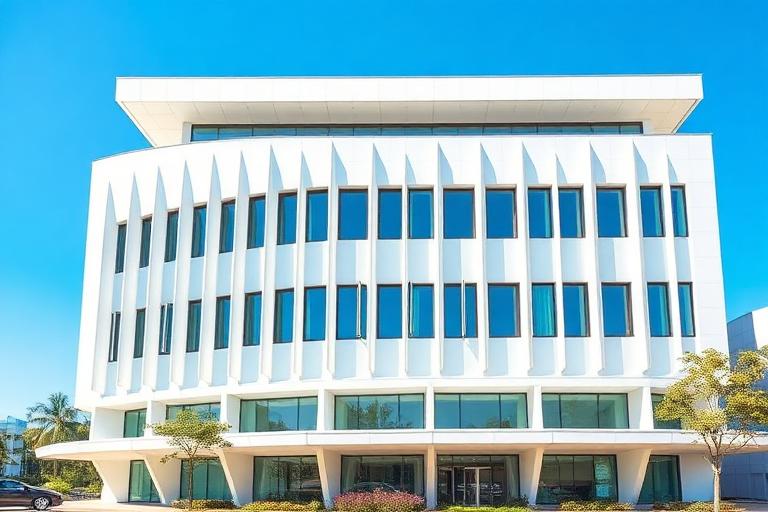
Example of the Architectural Modernism aesthetic
Archive platearch modernism

Source document

Registrar's index cards on the platen glass — captured by the scanner

Elio Archive — Registrar's OfficeArchitectural ModernismFILE 020-AM
When to use it
  • Brand identity requiring clarity, authority, and timeless rationalism
  • Corporate identity systems for institutions that want rigor without coldness
  • Architectural firm portfolios anchored in functional and structural honesty
  • Publication design or editorial systems with grid-based discipline
Perfect for
  • Architecture and design firms working in a rational Modernist lineage
  • Corporate and financial brands seeking authority and intelligence
  • Cultural institutions with a modernist campus or collection
  • Design schools and graduate programs in architecture and planning
What it looks like
  • Mies van der Rohe — Seagram Building, New York (1958)
  • Le Corbusier — Villa Savoye, Poissy (1931)
  • Walter Gropius — Bauhaus Dessau (1926)
  • Eero Saarinen — TWA Flight Center, JFK Airport (1962)

Aesthetic profile

8-channel console — dominant channels taped & circled by the registrar

Attribute Console — 020-AM 8 CH ACTIVEFIG. 1
CH01Minimal
MaximalL·50
CH02Analog
DigitalL·20
CH03Restrained
ExpressiveL·40
CH04Cool
WarmL·30
CH05Futuristic
NostalgicR·30
CH06Structured
ChaoticL·70
CH07Dark
LightR·20
CH08Organic
GeometricR·70

strongest channels circled — leans structured, geometric, minimal ✦

Profile card

Your aesthetic passport — share the fingerprint

Aesthetic Profile
Architectural Modernism
Modern Movement
1920–1975
MinimalAnalogRestrainedCoolNostalgicStructuredLightGeometric
StructuredGeometricMinimal3 materials
eliosignal.com/styles/arch-modernism

Material assembly

The style's primary materials, assembled bottom-up

Tap a stratum for material detail · Full catalog

Place in history

Modern Movement · 1920–1975 — tap any style to travel

Mood Board

Sign in to generate

Sign in to generate a mood board

Sign in

Editorial Depth

Sign in to unlock

Historical Context
Key Practitioners
What to Avoid

Sign in for editorial depth

Sign in

Cross-references

Bauhaus ArchitectureInternational StyleNeo-ModernismArchitectural Minimalism

About this aesthetic

What is the Architectural Modernism aesthetic?
The twentieth century's great rupture — Gropius, Le Corbusier, and Mies van der Rohe dismantled centuries of ornament to build the world from first principles: structure, light, function, and the flat roof as manifesto.
When should I use the Architectural Modernism aesthetic?
Use it for: Brand identity requiring clarity, authority, and timeless rationalism; Corporate identity systems for institutions that want rigor without coldness; Architectural firm portfolios anchored in functional and structural honesty; Publication design or editorial systems with grid-based discipline.
What is the Architectural Modernism style perfect for?
Perfect for Architecture and design firms working in a rational Modernist lineage, Corporate and financial brands seeking authority and intelligence, Cultural institutions with a modernist campus or collection, Design schools and graduate programs in architecture and planning.
What does the Architectural Modernism aesthetic look like?
Visuals typically feature: Mies van der Rohe — Seagram Building, New York (1958); Le Corbusier — Villa Savoye, Poissy (1931); Walter Gropius — Bauhaus Dessau (1926); Eero Saarinen — TWA Flight Center, JFK Airport (1962).

Build with the architectural modernism aesthetic

Elio turns aesthetic references into on-brand visuals. Generate, compose and publish from one studio.

Join the waitlist