Classical Architecture

The grammar of the Western built world — column orders, tripartite elevation, and the Parthenon's optical corrections have been the foundation of architectural education from Vitruvius through the Beaux-Arts.

Compare Classical Architecture with another style →
Record020-AC
AestheticClassical Architecture
ClassAnalog / Nostalgic
StatusINGESTING
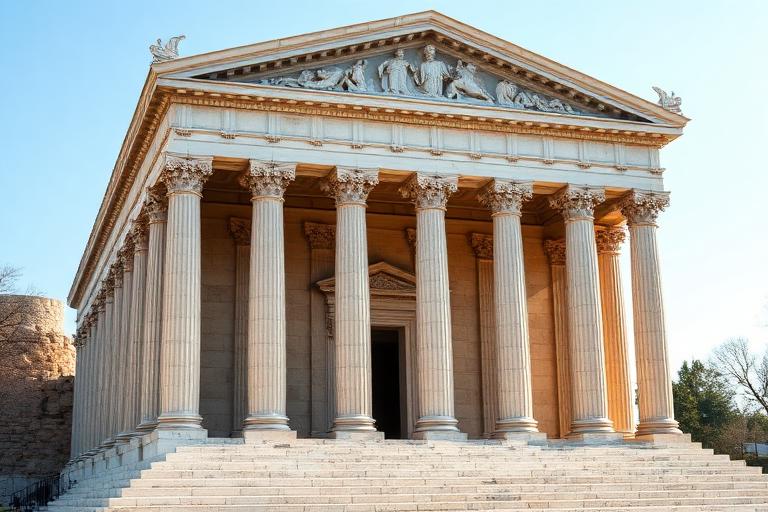
Example of the Classical Architecture aesthetic
Archive platearch classical

Source document

Registrar's index cards on the platen glass — captured by the scanner

Elio Archive — Registrar's OfficeClassical ArchitectureFILE 020-AC
When to use it
  • Brand identity demanding permanence, authority, and institutional weight
  • Legal, financial, or governmental identity requiring timeless gravitas
  • Luxury brand communication evoking heritage and craft lineage
  • Publication and editorial design rooted in classical typographic tradition
Perfect for
  • Law firms, financial institutions, and governmental bodies
  • Luxury heritage brands — watchmakers, jewelers, fine leather goods
  • Universities, libraries, and civic institutions with classical buildings
  • Fine art auction houses, galleries, and museum gift shops
What it looks like
  • Iktinos and Kallikrates — The Parthenon, Athens (447–432 BC)
  • Thomas Jefferson — Rotunda, University of Virginia (1826)
  • John Soane — Bank of England (1788–1833)
  • Karl Friedrich Schinkel — Altes Museum, Berlin (1830)

Aesthetic profile

8-channel console — dominant channels taped & circled by the registrar

Attribute Console — 020-AC 8 CH ACTIVEFIG. 1
CH01Minimal
MaximalR·20
CH02Analog
DigitalL·90
CH03Restrained
ExpressiveL·10
CH04Cool
WarmR·10
CH05Futuristic
NostalgicR·90
CH06Structured
ChaoticL·90
CH07Dark
LightR·30
CH08Organic
GeometricR·80

strongest channels circled — leans analog, nostalgic, structured ✦

Profile card

Your aesthetic passport — share the fingerprint

Aesthetic Profile
Classical Architecture
Antiquity
700 BCE–400
MaximalAnalogRestrainedWarmNostalgicStructuredLightGeometric
AnalogNostalgicStructured8 materials
eliosignal.com/styles/arch-classical

Material assembly

The style's primary materials, assembled bottom-up

Tap a stratum for material detail · Full catalog

Place in history

Antiquity · 700 BCE–400 — tap any style to travel

Mood Board

Sign in to generate

Sign in to generate a mood board

Sign in

Editorial Depth

Sign in to unlock

Historical Context
Key Practitioners
What to Avoid

Sign in for editorial depth

Sign in

Cross-references

Neoclassical ArchitectureStripped ClassicismMediterranean ArchitectureGothic Architecture

About this aesthetic

What is the Classical Architecture aesthetic?
The grammar of the Western built world — column orders, tripartite elevation, and the Parthenon's optical corrections have been the foundation of architectural education from Vitruvius through the Beaux-Arts.
When should I use the Classical Architecture aesthetic?
Use it for: Brand identity demanding permanence, authority, and institutional weight; Legal, financial, or governmental identity requiring timeless gravitas; Luxury brand communication evoking heritage and craft lineage; Publication and editorial design rooted in classical typographic tradition.
What is the Classical Architecture style perfect for?
Perfect for Law firms, financial institutions, and governmental bodies, Luxury heritage brands — watchmakers, jewelers, fine leather goods, Universities, libraries, and civic institutions with classical buildings, Fine art auction houses, galleries, and museum gift shops.
What does the Classical Architecture aesthetic look like?
Visuals typically feature: Iktinos and Kallikrates — The Parthenon, Athens (447–432 BC); Thomas Jefferson — Rotunda, University of Virginia (1826); John Soane — Bank of England (1788–1833); Karl Friedrich Schinkel — Altes Museum, Berlin (1830).

Build with the classical architecture aesthetic

Elio turns aesthetic references into on-brand visuals. Generate, compose and publish from one studio.

Join the waitlist