Japanese Minimalism

Ma — the charged void between elements — and wabi-sabi's embrace of impermanence and asymmetry: Ando's shadow-precise concrete, SANAA's dissolved glass boundaries, Kuma's natural material grids that absorb rather than impose.

Compare Japanese Minimalism with another style →
Record020-AJ
AestheticJapanese Minimalism
ClassMinimal / Structured
StatusINGESTING
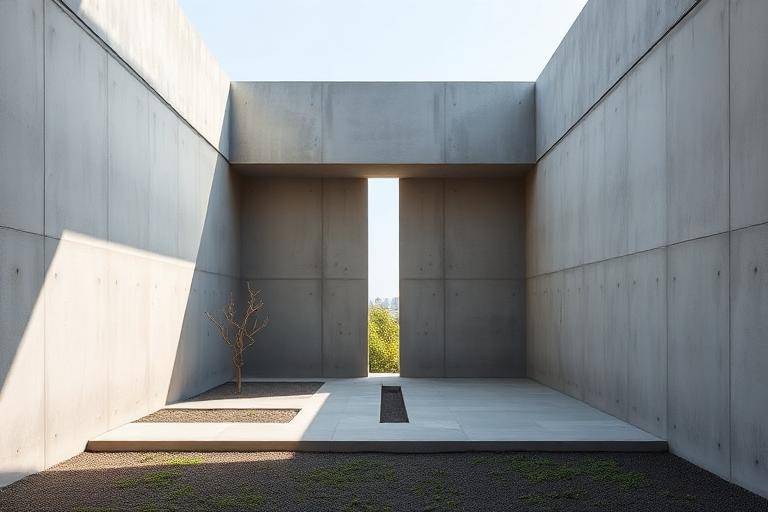
Example of the Japanese Minimalism aesthetic
Archive platearch japanese minimalism

Source document

Registrar's index cards on the platen glass — captured by the scanner

Elio Archive — Registrar's OfficeJapanese MinimalismFILE 020-AJ
When to use it
  • Luxury brand identity where restraint and silence communicate ultimate refinement
  • Wellness, meditation, and contemplative space brands
  • High-end residential and hospitality brands for a design-literate global audience
  • Art gallery and museum identity where the work must be the only voice
Perfect for
  • Japanese and Japan-influenced luxury fashion, beauty, and lifestyle brands
  • Meditation, mindfulness, and contemplative wellness brands
  • High-end residential architects and interior designers
  • Cultural institutions and galleries working with contemporary Japanese art
What it looks like
  • Tadao Ando — Church of the Light, Ibaraki, Osaka (1989)
  • SANAA — 21st Century Museum of Contemporary Art, Kanazawa (2004)
  • Kengo Kuma — Stone Museum, Nasu (2000)
  • Sou Fujimoto — House NA, Tokyo (2011)

Aesthetic profile

8-channel console — dominant channels taped & circled by the registrar

Attribute Console — 020-AJ 8 CH ACTIVEFIG. 1
CH01Minimal
MaximalL·80
CH02Analog
DigitalL·40
CH03Restrained
ExpressiveL·70
CH04Cool
WarmCTR·0
CH05Futuristic
NostalgicR·40
CH06Structured
ChaoticL·80
CH07Dark
LightR·30
CH08Organic
GeometricL·30

strongest channels circled — leans minimal, structured, restrained ✦

Profile card

Your aesthetic passport — share the fingerprint

Aesthetic Profile
Japanese Minimalism
Contemporary
1980–present
MinimalAnalogRestrainedWarmNostalgicStructuredLightOrganic
MinimalStructuredRestrained3 materials
eliosignal.com/styles/arch-japanese-minimalism

Material assembly

The style's primary materials, assembled bottom-up

Tap a stratum for material detail · Full catalog

Place in history

Contemporary · 1980–present — tap any style to travel

Mood Board

Sign in to generate

Sign in to generate a mood board

Sign in

Editorial Depth

Sign in to unlock

Historical Context
Key Practitioners
What to Avoid

Sign in for editorial depth

Sign in

Cross-references

Architectural MinimalismSoft MinimalismWabi-SabiOrganic Architecture

About this aesthetic

What is the Japanese Minimalism aesthetic?
Ma — the charged void between elements — and wabi-sabi's embrace of impermanence and asymmetry: Ando's shadow-precise concrete, SANAA's dissolved glass boundaries, Kuma's natural material grids that absorb rather than impose.
When should I use the Japanese Minimalism aesthetic?
Use it for: Luxury brand identity where restraint and silence communicate ultimate refinement; Wellness, meditation, and contemplative space brands; High-end residential and hospitality brands for a design-literate global audience; Art gallery and museum identity where the work must be the only voice.
What is the Japanese Minimalism style perfect for?
Perfect for Japanese and Japan-influenced luxury fashion, beauty, and lifestyle brands, Meditation, mindfulness, and contemplative wellness brands, High-end residential architects and interior designers, Cultural institutions and galleries working with contemporary Japanese art.
What does the Japanese Minimalism aesthetic look like?
Visuals typically feature: Tadao Ando — Church of the Light, Ibaraki, Osaka (1989); SANAA — 21st Century Museum of Contemporary Art, Kanazawa (2004); Kengo Kuma — Stone Museum, Nasu (2000); Sou Fujimoto — House NA, Tokyo (2011).

Build with the japanese minimalism aesthetic

Elio turns aesthetic references into on-brand visuals. Generate, compose and publish from one studio.

Join the waitlist