Brutalism

Raw concrete as conviction — Brutalism treated exposed béton brut as an honest material statement, from Paul Rudolph's corrugated towers to Moshe Safdie's Habitat 67 stacked modules and Marcel Breuer's Whitney Museum.

Compare Brutalism with another style →
Record020-AB
AestheticBrutalism
ClassGeometric / Structured
StatusINGESTING
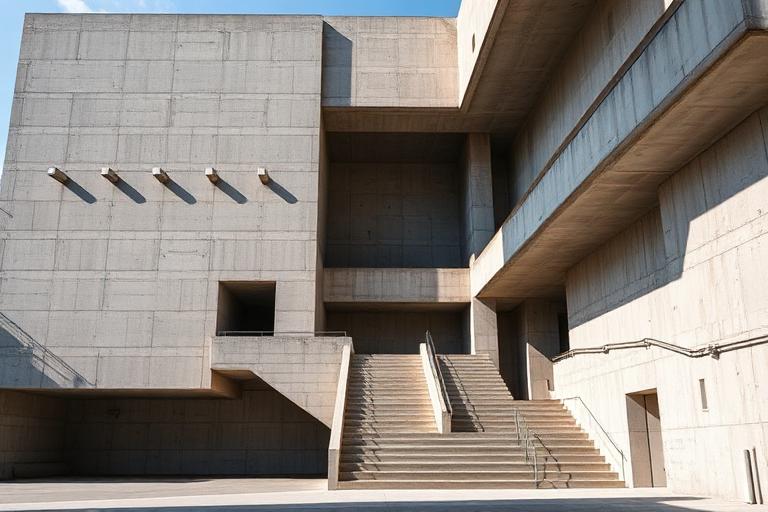
Example of the Brutalism aesthetic
Archive platearch brutalism

Source document

Registrar's index cards on the platen glass — captured by the scanner

Elio Archive — Registrar's OfficeBrutalismFILE 020-AB
When to use it
  • Brand identity demanding unapologetic weight and material honesty
  • Editorial design for culture, architecture, or academic institutions
  • Campaign work for luxury brands subverting softness with severity
  • Portfolio or publication design requiring confrontational spatial presence
Perfect for
  • Architecture firms with a Brutalist or materialist practice
  • Cultural institutions — museums, theaters, universities — with bold civic ambition
  • Fashion and luxury brands playing against minimalist softness
  • Publishers and magazines covering architecture, urbanism, or critical theory
What it looks like
  • Paul Rudolph — Art and Architecture Building, Yale University (1963)
  • Marcel Breuer — Whitney Museum of American Art (now Met Breuer), New York (1966)
  • Alison and Peter Smithson — The Economist Plaza, London (1964)
  • Moshe Safdie — Habitat 67, Montreal World Expo (1967)

Aesthetic profile

8-channel console — dominant channels taped & circled by the registrar

Attribute Console — 020-AB 8 CH ACTIVEFIG. 1
CH01Minimal
MaximalL·20
CH02Analog
DigitalL·40
CH03Restrained
ExpressiveR·30
CH04Cool
WarmL·50
CH05Futuristic
NostalgicR·30
CH06Structured
ChaoticL·60
CH07Dark
LightL·40
CH08Organic
GeometricR·70

strongest channels circled — leans geometric, structured, cool ✦

Profile card

Your aesthetic passport — share the fingerprint

Aesthetic Profile
Brutalism
Postwar
1950–1979
MinimalAnalogExpressiveCoolNostalgicStructuredDarkGeometric
GeometricStructuredCool4 materials
eliosignal.com/styles/arch-brutalism

Material assembly

The style's primary materials, assembled bottom-up

Tap a stratum for material detail · Full catalog

Place in history

Postwar · 1950–1979 — tap any style to travel

Mood Board

Sign in to generate

Sign in to generate a mood board

Sign in

Editorial Depth

Sign in to unlock

Historical Context
Key Practitioners
What to Avoid

Sign in for editorial depth

Sign in

Cross-references

Monolithic ArchitectureConstructivismIndustrial ArchitectureArchitectural Modernism

About this aesthetic

What is the Brutalism aesthetic?
Raw concrete as conviction — Brutalism treated exposed béton brut as an honest material statement, from Paul Rudolph's corrugated towers to Moshe Safdie's Habitat 67 stacked modules and Marcel Breuer's Whitney Museum.
When should I use the Brutalism aesthetic?
Use it for: Brand identity demanding unapologetic weight and material honesty; Editorial design for culture, architecture, or academic institutions; Campaign work for luxury brands subverting softness with severity; Portfolio or publication design requiring confrontational spatial presence.
What is the Brutalism style perfect for?
Perfect for Architecture firms with a Brutalist or materialist practice, Cultural institutions — museums, theaters, universities — with bold civic ambition, Fashion and luxury brands playing against minimalist softness, Publishers and magazines covering architecture, urbanism, or critical theory.
What does the Brutalism aesthetic look like?
Visuals typically feature: Paul Rudolph — Art and Architecture Building, Yale University (1963); Marcel Breuer — Whitney Museum of American Art (now Met Breuer), New York (1966); Alison and Peter Smithson — The Economist Plaza, London (1964); Moshe Safdie — Habitat 67, Montreal World Expo (1967).

Build with the brutalism aesthetic

Elio turns aesthetic references into on-brand visuals. Generate, compose and publish from one studio.

Join the waitlist