Prairie Style

Wright's declaration that American architecture should grow from American ground — horizontal rooflines echoing the Midwest prairie, natural materials, the fireplace as spiritual center, and the destruction of the Victorian box room-by-room.

Compare Prairie Style with another style →
Record020-AP
AestheticPrairie Style
ClassAnalog / Nostalgic
StatusINGESTING
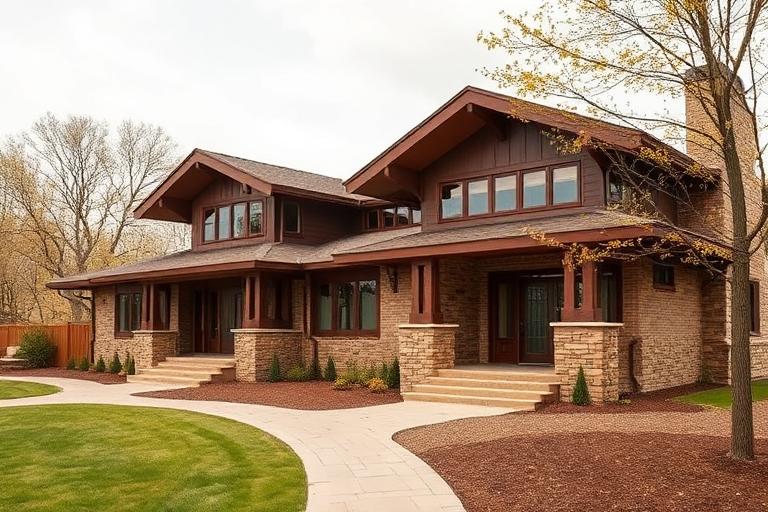
Example of the Prairie Style aesthetic
Archive platearch prairie style

Source document

Registrar's index cards on the platen glass — captured by the scanner

Elio Archive — Registrar's OfficePrairie StyleFILE 020-AP
When to use it
  • Brand identity rooted in American landscape, horizontality, and crafted organic modernity
  • Residential architecture or homebuilder brand with a heritage of designed living
  • Cultural institution brand in the American Midwest celebrating regional design identity
  • Furniture and homeware brand with an Arts and Crafts or early American modern lineage
Perfect for
  • American residential architecture firms working in a horizontal, landscape-embedded tradition
  • Cultural institutions celebrating American design heritage — museums, foundations
  • Homeware and furniture brands rooted in early-twentieth-century American craft
  • Real estate brands marketing landscape-connected residential development
What it looks like
  • Frank Lloyd Wright — Frederick C. Robie House, Chicago (1910)
  • Frank Lloyd Wright — Darwin D. Martin House, Buffalo (1905)
  • Walter Burley Griffin — Ravine Bluffs Development, Glencoe, Illinois (1915)
  • Frank Lloyd Wright — Taliesin, Spring Green, Wisconsin (1911)

Aesthetic profile

8-channel console — dominant channels taped & circled by the registrar

Attribute Console — 020-AP 8 CH ACTIVEFIG. 1
CH01Minimal
MaximalL·20
CH02Analog
DigitalL·60
CH03Restrained
ExpressiveR·10
CH04Cool
WarmR·50
CH05Futuristic
NostalgicR·60
CH06Structured
ChaoticL·50
CH07Dark
LightR·30
CH08Organic
GeometricL·30

strongest channels circled — leans analog, nostalgic, warm ✦

Profile card

Your aesthetic passport — share the fingerprint

Aesthetic Profile
Prairie Style
Early Modern
1900–1920
MinimalAnalogExpressiveWarmNostalgicStructuredLightOrganic
AnalogNostalgicWarm5 materials
eliosignal.com/styles/arch-prairie-style

Material assembly

The style's primary materials, assembled bottom-up

Tap a stratum for material detail · Full catalog

Place in history

Early Modern · 1900–1920 — tap any style to travel

Mood Board

Sign in to generate

Sign in to generate a mood board

Sign in

Editorial Depth

Sign in to unlock

Historical Context
Key Practitioners
What to Avoid

Sign in for editorial depth

Sign in

Cross-references

Organic ArchitectureVernacular ArchitectureMid-Century ModernScandinavian Architecture

About this aesthetic

What is the Prairie Style aesthetic?
Wright's declaration that American architecture should grow from American ground — horizontal rooflines echoing the Midwest prairie, natural materials, the fireplace as spiritual center, and the destruction of the Victorian box room-by-room.
When should I use the Prairie Style aesthetic?
Use it for: Brand identity rooted in American landscape, horizontality, and crafted organic modernity; Residential architecture or homebuilder brand with a heritage of designed living; Cultural institution brand in the American Midwest celebrating regional design identity; Furniture and homeware brand with an Arts and Crafts or early American modern lineage.
What is the Prairie Style style perfect for?
Perfect for American residential architecture firms working in a horizontal, landscape-embedded tradition, Cultural institutions celebrating American design heritage — museums, foundations, Homeware and furniture brands rooted in early-twentieth-century American craft, Real estate brands marketing landscape-connected residential development.
What does the Prairie Style aesthetic look like?
Visuals typically feature: Frank Lloyd Wright — Frederick C. Robie House, Chicago (1910); Frank Lloyd Wright — Darwin D. Martin House, Buffalo (1905); Walter Burley Griffin — Ravine Bluffs Development, Glencoe, Illinois (1915); Frank Lloyd Wright — Taliesin, Spring Green, Wisconsin (1911).

Build with the prairie style aesthetic

Elio turns aesthetic references into on-brand visuals. Generate, compose and publish from one studio.

Join the waitlist