Architectural Expressionism

Buildings as psychic projection — Mendelsohn's Einstein Tower sculpted from concrete intuition, Gaudí's Sagrada Família growing from stone and faith, Poelzig's Grosses Schauspielhaus as a cave of stalactites: emotion precedes structure.

Compare Architectural Expressionism with another style →
Record020-AE
AestheticArchitectural Expressionism
ClassExpressive / Maximal
StatusINGESTING
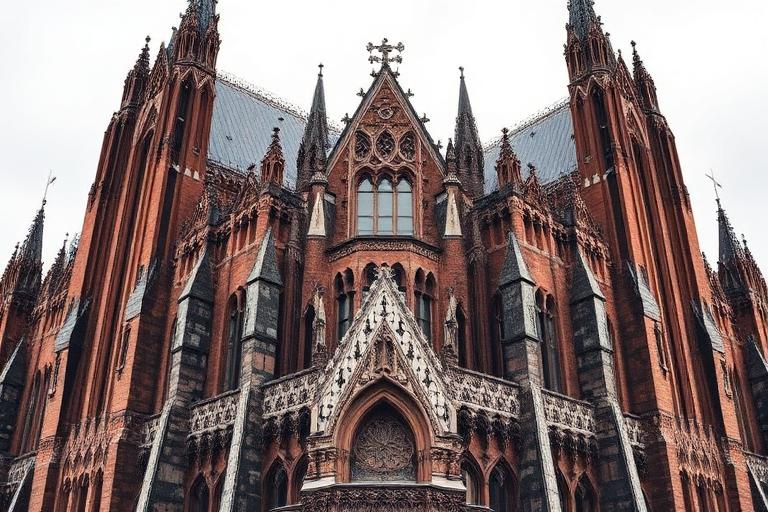
Example of the Architectural Expressionism aesthetic
Archive platearch expressionism

Source document

Registrar's index cards on the platen glass — captured by the scanner

Elio Archive — Registrar's OfficeArchitectural ExpressionismFILE 020-AE
When to use it
  • Brand identity where emotional intensity, individuality, and creative force are the proposition
  • Cultural institution or performing arts brand requiring maximum visceral impact
  • Architecture firm or artist identity where the singular authorial voice is the differentiator
  • Fashion and luxury brand that positions the irrational and romantic against minimalist convention
Perfect for
  • Performing arts organizations — opera houses, theater companies, music festivals
  • Architecture firms with a highly personal, expressive formal language
  • Luxury and haute couture fashion brands with a romantic, dramatic aesthetic
  • Artist estates, foundations, and museums celebrating singular creative visions
What it looks like
  • Erich Mendelsohn — Einstein Tower, Potsdam (1921)
  • Hans Poelzig — Grosses Schauspielhaus, Berlin (1919)
  • Antoni Gaudí — Sagrada Família, Barcelona (1882–ongoing)
  • Rudolf Steiner — Goetheanum II, Dornach, Switzerland (1928)

Aesthetic profile

8-channel console — dominant channels taped & circled by the registrar

Attribute Console — 020-AE 8 CH ACTIVEFIG. 1
CH01Minimal
MaximalR·50
CH02Analog
DigitalL·20
CH03Restrained
ExpressiveR·80
CH04Cool
WarmL·10
CH05Futuristic
NostalgicR·30
CH06Structured
ChaoticR·50
CH07Dark
LightL·10
CH08Organic
GeometricL·40

strongest channels circled — leans expressive, maximal, chaotic ✦

Profile card

Your aesthetic passport — share the fingerprint

Aesthetic Profile
Architectural Expressionism
Early Modern
1910–1925
MaximalAnalogExpressiveCoolNostalgicChaoticDarkOrganic
ExpressiveMaximalChaotic4 materials
eliosignal.com/styles/arch-expressionism

Material assembly

The style's primary materials, assembled bottom-up

Tap a stratum for material detail · Full catalog

Place in history

Early Modern · 1910–1925 — tap any style to travel

Mood Board

Sign in to generate

Sign in to generate a mood board

Sign in

Editorial Depth

Sign in to unlock

Historical Context
Key Practitioners
What to Avoid

Sign in for editorial depth

Sign in

Cross-references

Organic ArchitectureGothic ArchitectureArchitectural FuturismBlobitecture

About this aesthetic

What is the Architectural Expressionism aesthetic?
Buildings as psychic projection — Mendelsohn's Einstein Tower sculpted from concrete intuition, Gaudí's Sagrada Família growing from stone and faith, Poelzig's Grosses Schauspielhaus as a cave of stalactites: emotion precedes structure.
When should I use the Architectural Expressionism aesthetic?
Use it for: Brand identity where emotional intensity, individuality, and creative force are the proposition; Cultural institution or performing arts brand requiring maximum visceral impact; Architecture firm or artist identity where the singular authorial voice is the differentiator; Fashion and luxury brand that positions the irrational and romantic against minimalist convention.
What is the Architectural Expressionism style perfect for?
Perfect for Performing arts organizations — opera houses, theater companies, music festivals, Architecture firms with a highly personal, expressive formal language, Luxury and haute couture fashion brands with a romantic, dramatic aesthetic, Artist estates, foundations, and museums celebrating singular creative visions.
What does the Architectural Expressionism aesthetic look like?
Visuals typically feature: Erich Mendelsohn — Einstein Tower, Potsdam (1921); Hans Poelzig — Grosses Schauspielhaus, Berlin (1919); Antoni Gaudí — Sagrada Família, Barcelona (1882–ongoing); Rudolf Steiner — Goetheanum II, Dornach, Switzerland (1928).

Build with the architectural expressionism aesthetic

Elio turns aesthetic references into on-brand visuals. Generate, compose and publish from one studio.

Join the waitlist