Mediterranean Architecture

The sun-logic of three thousand years — Cycladic cubes on volcanic caldera, Moroccan riad courtyard cooling, and the Alhambra's geometric water gardens as the mathematical definition of paradise: thick walls, deep shadow, water at the center.

Compare Mediterranean Architecture with another style →
Record020-AM
AestheticMediterranean Architecture
ClassWarm / Analog
StatusINGESTING
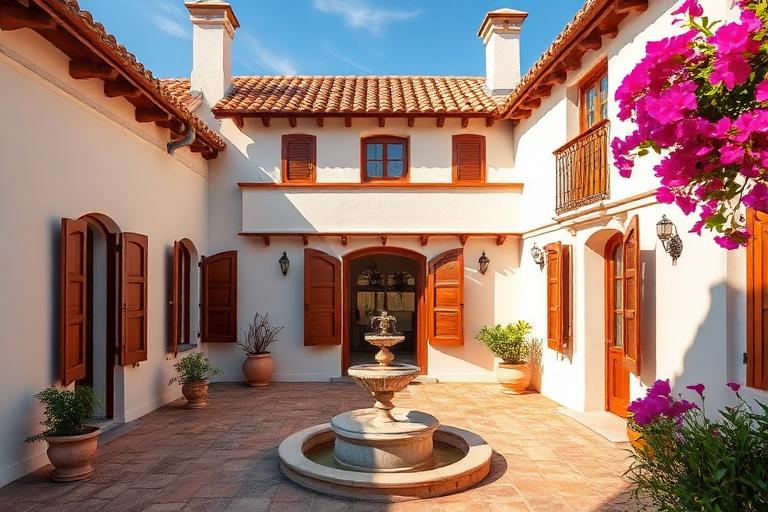
Example of the Mediterranean Architecture aesthetic
Archive platearch mediterranean

Source document

Registrar's index cards on the platen glass — captured by the scanner

Elio Archive — Registrar's OfficeMediterranean ArchitectureFILE 020-AM
When to use it
  • Brand identity evoking warmth, craft, and the specificity of Mediterranean place
  • Hospitality, food, and lifestyle brand rooted in Southern European or North African culture
  • Residential architecture brand working in or referencing Mediterranean climate typologies
  • Wine, olive oil, and culinary brand communicating terroir and sun-drenched provenance
Perfect for
  • Luxury hospitality and resort brands in Spain, Italy, Greece, and Morocco
  • Food, wine, and culinary brands from the Mediterranean region
  • Residential developers in Mediterranean-climate markets — California, Spain, Portugal
  • Fashion and lifestyle brands communicating warmth, color, and southern European ease
What it looks like
  • Cycladic village architecture — Oia, Santorini (Aegean vernacular)
  • Nasrid Dynasty — Alhambra Palace, Granada (1238–1358)
  • Andrea Palladio — Villa Rotonda, Vicenza (1592)
  • Hassan Fathy — New Gourna Village, Luxor, Egypt (1945)

Aesthetic profile

8-channel console — dominant channels taped & circled by the registrar

Attribute Console — 020-AM 8 CH ACTIVEFIG. 1
CH01Minimal
MaximalR·10
CH02Analog
DigitalL·70
CH03Restrained
ExpressiveR·30
CH04Cool
WarmR·80
CH05Futuristic
NostalgicR·60
CH06Structured
ChaoticL·20
CH07Dark
LightR·60
CH08Organic
GeometricL·30

strongest channels circled — leans warm, analog, nostalgic ✦

Profile card

Your aesthetic passport — share the fingerprint

Aesthetic Profile
Mediterranean Architecture
Vernacular
1700–present
MaximalAnalogExpressiveWarmNostalgicStructuredLightOrganic
WarmAnalogNostalgic6 materials
eliosignal.com/styles/arch-mediterranean

Material assembly

The style's primary materials, assembled bottom-up

Tap a stratum for material detail · Full catalog

Place in history

Vernacular · 1700–present — tap any style to travel

Mood Board

Sign in to generate

Sign in to generate a mood board

Sign in

Editorial Depth

Sign in to unlock

Historical Context
Key Practitioners
What to Avoid

Sign in for editorial depth

Sign in

Cross-references

Vernacular ArchitectureClassical ArchitecturePueblo RevivalTropical Modernism

About this aesthetic

What is the Mediterranean Architecture aesthetic?
The sun-logic of three thousand years — Cycladic cubes on volcanic caldera, Moroccan riad courtyard cooling, and the Alhambra's geometric water gardens as the mathematical definition of paradise: thick walls, deep shadow, water at the center.
When should I use the Mediterranean Architecture aesthetic?
Use it for: Brand identity evoking warmth, craft, and the specificity of Mediterranean place; Hospitality, food, and lifestyle brand rooted in Southern European or North African culture; Residential architecture brand working in or referencing Mediterranean climate typologies; Wine, olive oil, and culinary brand communicating terroir and sun-drenched provenance.
What is the Mediterranean Architecture style perfect for?
Perfect for Luxury hospitality and resort brands in Spain, Italy, Greece, and Morocco, Food, wine, and culinary brands from the Mediterranean region, Residential developers in Mediterranean-climate markets — California, Spain, Portugal, Fashion and lifestyle brands communicating warmth, color, and southern European ease.
What does the Mediterranean Architecture aesthetic look like?
Visuals typically feature: Cycladic village architecture — Oia, Santorini (Aegean vernacular); Nasrid Dynasty — Alhambra Palace, Granada (1238–1358); Andrea Palladio — Villa Rotonda, Vicenza (1592); Hassan Fathy — New Gourna Village, Luxor, Egypt (1945).

Build with the mediterranean architecture aesthetic

Elio turns aesthetic references into on-brand visuals. Generate, compose and publish from one studio.

Join the waitlist